As with any product, certain risks should be considered when using these magnets. Size is important: a small disc magnet 6.35 mm in diameter and 3.125 mm thick is generally harmless to an adult finger, but may be swallowed by children under five. Swallowing one magnet usually does not cause severe harm; swallowing more than one can allow them to attract through the stomach or intestine, causing a perforation that may require surgery. In addition, most magnets are nickel coated, and a small number of people may have a skin allergy to nickel.
It depends on the application. Most electronic products include some magnetic shielding against stray fields. However, strong magnets can still cause damage when placed near speakers, microphones, or older devices such as floppy disks and hard disk drives. SSDs are generally unaffected by magnets, but unnecessary testing is not recommended.
There are three types of magnets: permanent magnets, temporary magnets and electromagnets. Permanent magnets produce a magnetic field without an external magnetic or electrical source. Temporary magnets behave as magnets when attached to or close to a magnetic-field source, and lose magnetism when that source is removed. Electromagnets require electricity to function as magnets.
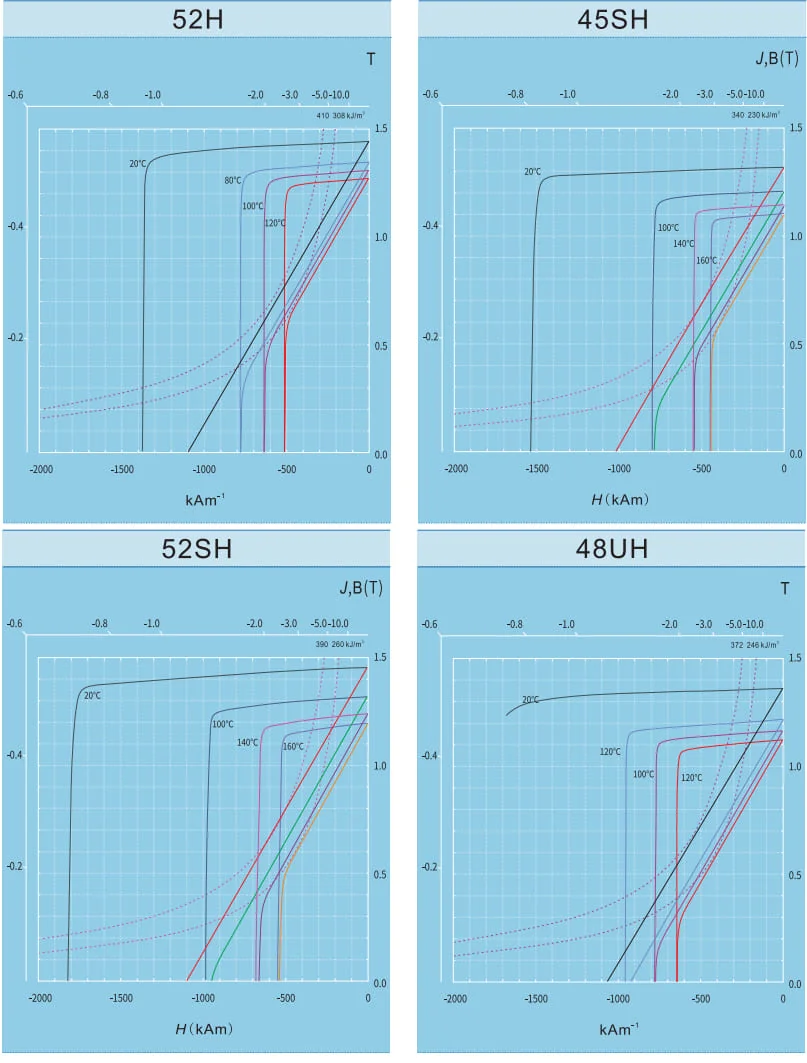
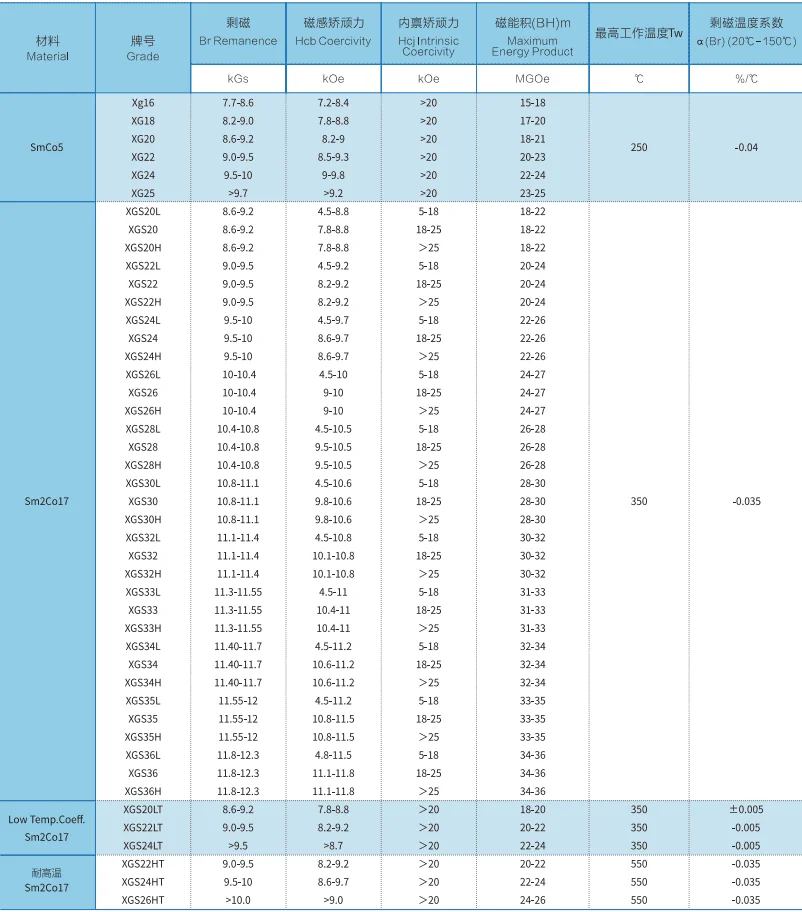
Ambient temperature: sintered NdFeB has negative temperature coefficients (αBr < -0.13%/°C and αHcj < -0.6%/°C). Both peak and sustained operating temperature can cause different degrees of demagnetization. Humidity: NdFeB is susceptible to corrosion and oxidation, so surface treatment is generally used for protection; drier conditions support a longer service life. The main parameters used to evaluate magnetic performance are remanence Br, coercivity Hc and maximum energy product BHmax.
A gaussmeter, magnetometer or pull-force tester is typically used to measure magnet strength. A gaussmeter measures field strength in gauss; a magnetometer measures in gauss or comparable arbitrary units; and a pull-force tester measures holding force in pounds, kilograms or other force units.
Sintered NdFeB permanent magnets are manufactured by powder metallurgy. The main steps include melting, powder preparation, alignment and compaction, sintering, machining and surface treatment. Oxygen-content control is an important indicator of process capability.
Material cost: higher performance requirements result in higher cost; for example, NdFeB N45 costs substantially more than N35. Processing cost: more complex shapes, tighter tolerances and smaller batch sizes all increase machining cost.
When stored and used at suitable temperature and humidity, without strong external magnetic fields, radiation or other performance-affecting factors, magnetic performance can be retained for an extremely long time.
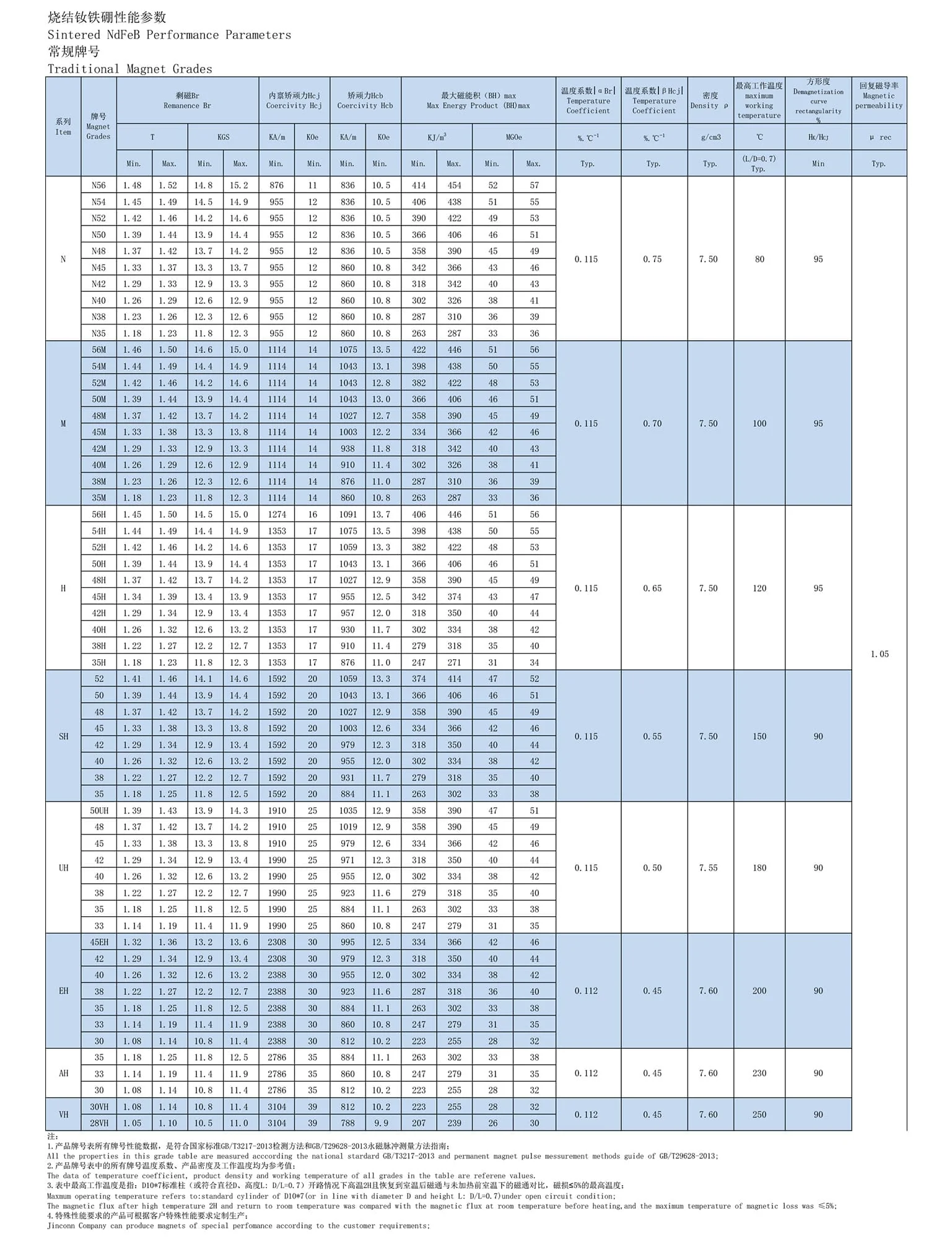
There are three main parameters: remanence Br (gauss), the residual flux density after a saturated magnet has its external field removed, which indicates the field it can provide; coercivity Hc (oersteds), which indicates resistance to demagnetization; and maximum energy product BHmax (gauss-oersteds), which indicates how much magnetic energy the magnet can store.
For magnets of the same shape and size, surface field strength generally ranks from highest to lowest as: NdFeB > SmCo > AlNiCo > ferrite > flexible rubber magnet.
Precision Automation Equipment
Leveraging the Greater Bay Area automation supply chain, we continuously introduce and independently develop precision automated equipment for magnetic-material production and inspection. This improves efficiency, shortens delivery cycles and strengthens our competitive position. Our operation includes more than 500 types of equipment and has the capacity to produce approximately one billion finished pieces annually.
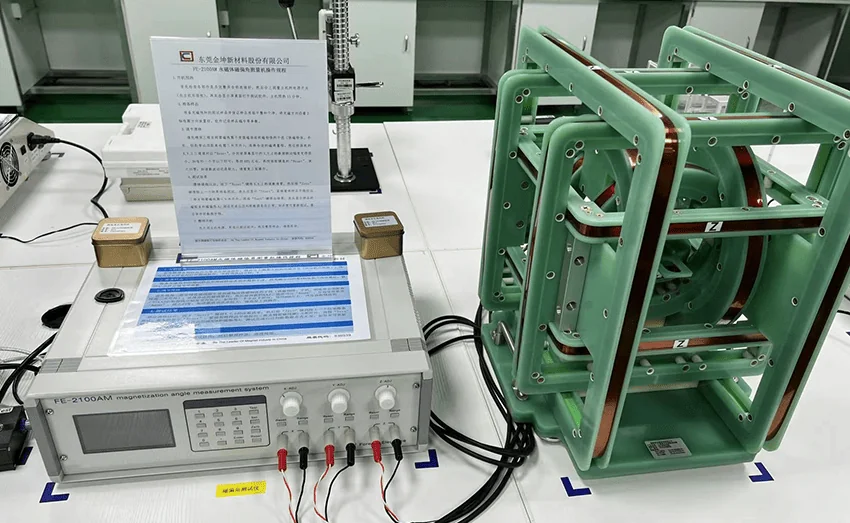
Permanent Magnet Angle Deviation Measuring Machine
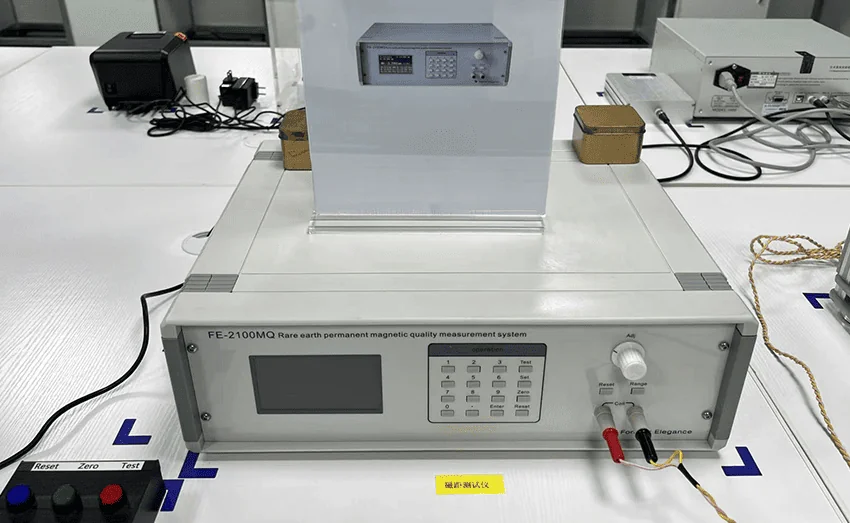
Magnetic Distance Tester
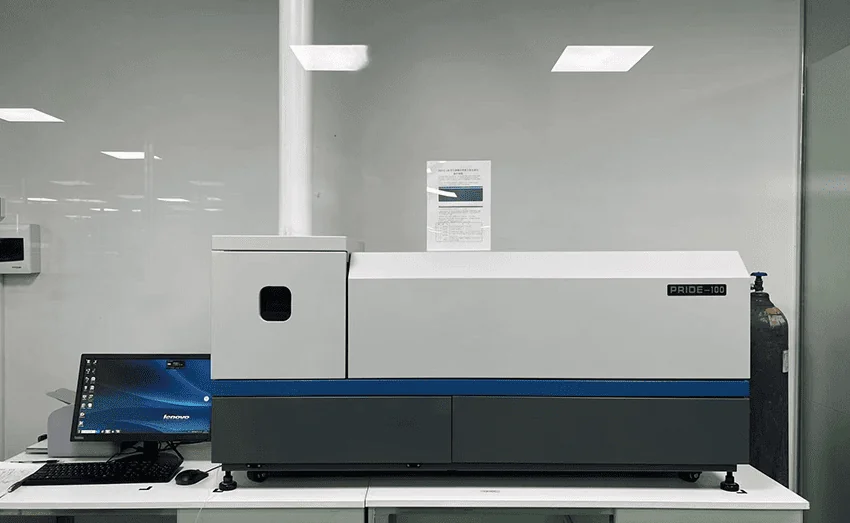
Inductively Coupled Plasma Spectrometer
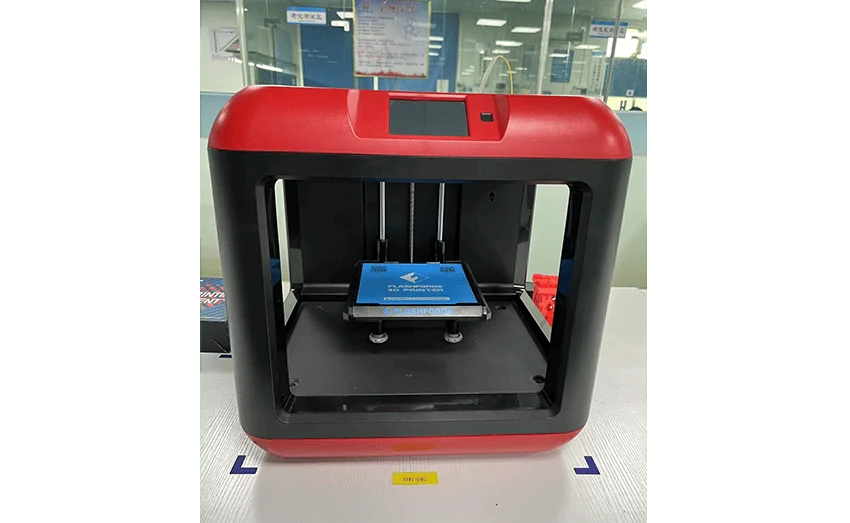
3D-printer
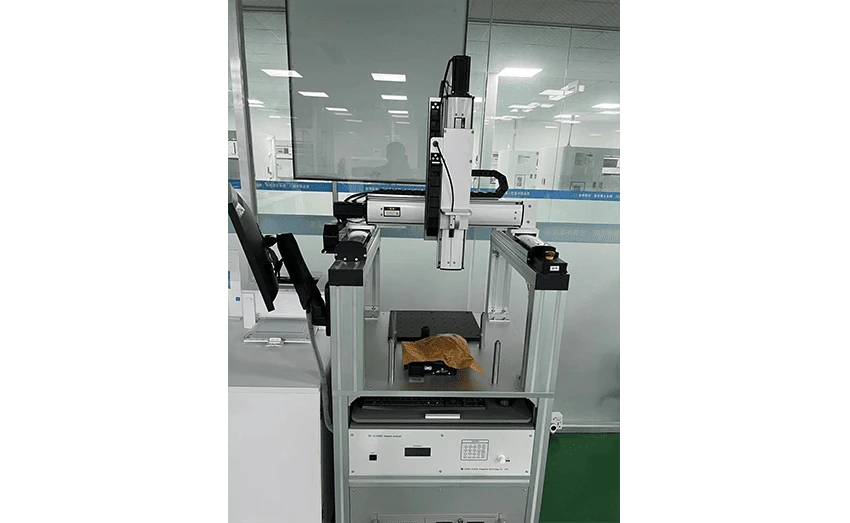
Magnet-analyser
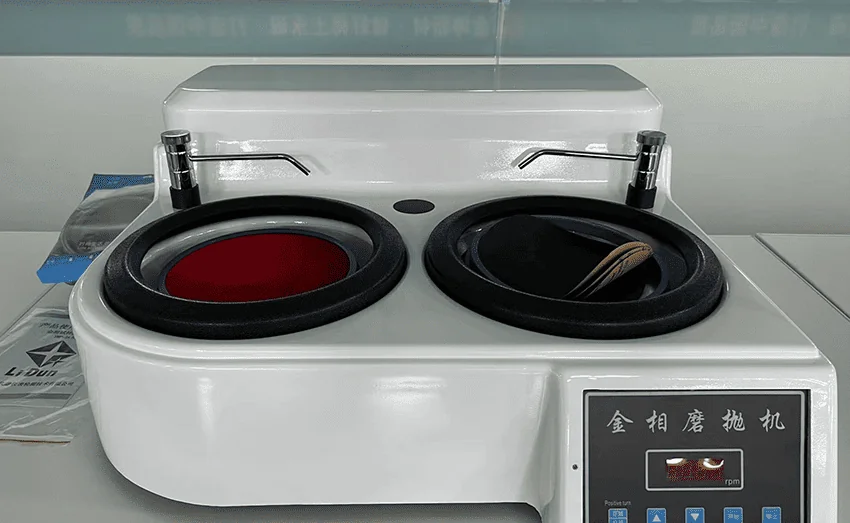
Grinding and Polishing Machine
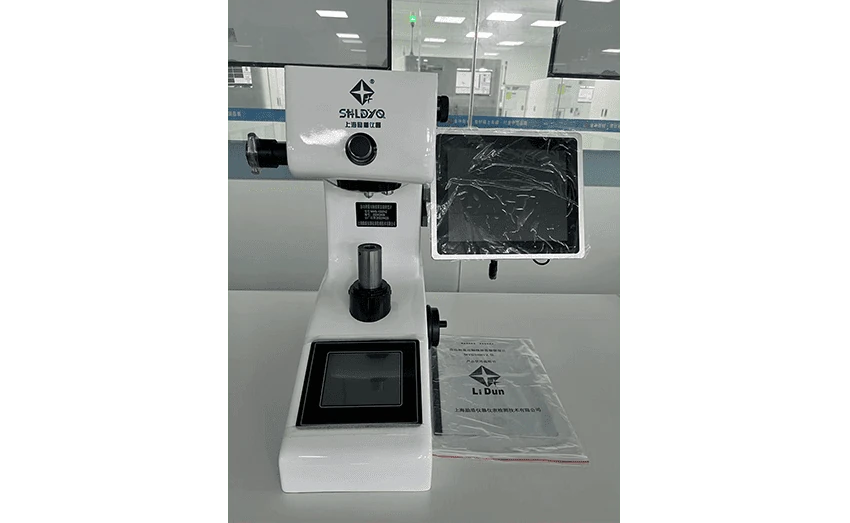
Microhardness Tester
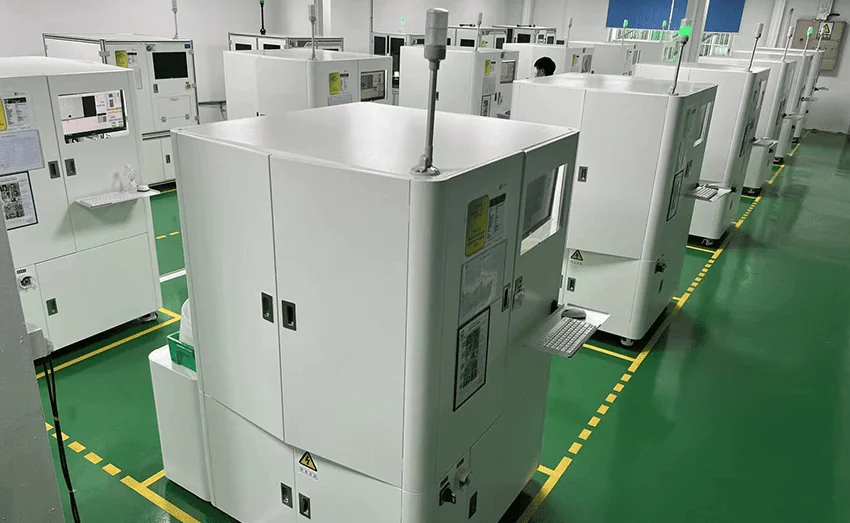
Automatic Inspection System
Manufacturing Process
Alloy Composition Design
Also known as composition design. The composition of sintered NdFeB is critical to product quality and the ability to meet customer magnetic-performance requirements, because many intrinsic properties, such as magnetic polarization and Curie temperature, are determined by composition. The principle is to secure sufficiently high intrinsic performance while considering material cost.
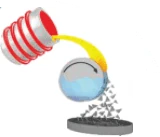
Melting
Melting is the first production step for sintered NdFeB magnets. The melting furnace produces rapidly solidified alloy flakes at approximately 1,300°C over about four hours. The raw materials are melted, cooled and processed into alloy flakes before entering the next step.
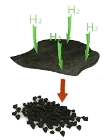
Hydrogen Decrepitation
During the first crushing step, hydrogen decrepitation coarsely breaks the raw alloy into particles below several hundred micrometers.
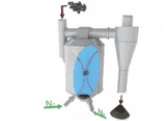
Jet Milling
The purpose of powder preparation is to break large alloy ingots into powder of a controlled size. A modern process uses hydrogen decrepitation and jet milling to process NdFeB strip-cast flakes. To achieve good magnetic alignment, powder particles should be small (3–4 μm), tightly distributed, and spherical or near-spherical.
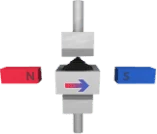
Compaction and Alignment
Crushed magnetic powder is loaded into a mold and aligned under an external magnetic field before compaction. Common methods include membrane pressing, die pressing plus cold isostatic pressing, and rubber-mold isostatic pressing. At the same neodymium content, rubber-mold isostatic pressing can achieve a higher energy product.
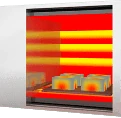
Sintering
Particles in a compacted sintered-NdFeB green body are mainly in mechanical contact and have low bond strength. To increase density, improve particle bonding and produce the microstructure needed for high permanent-magnet performance, the compact is heat treated below the melting point of the primary powder phase. This process is called sintering.
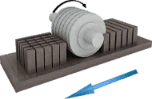
Machining
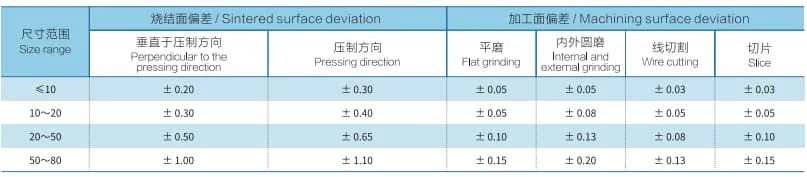
Sintered NdFeB magnets are used in many shapes, including discs, cylinders, rings, blocks, arc segments, sectors and other irregular forms. Except for large regular components, most magnets are difficult to form in one step. Large blanks are therefore produced first, then sintered, tempered, machined and ground to the required shape and dimensions.
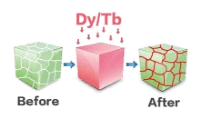
Grain Boundary Diffusion
Grain-boundary diffusion alloy powder is coated onto surfaces perpendicular to the magnetization direction of the rare-earth permanent magnet, followed by vapor-deposition diffusion. This technology reduces heavy-rare-earth usage, conserves resources and lowers cost. It greatly improves intrinsic coercivity with little loss of remanence, enabling ultra-high-performance grades such as 54UH and 50EH.
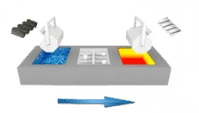
Surface Treatment
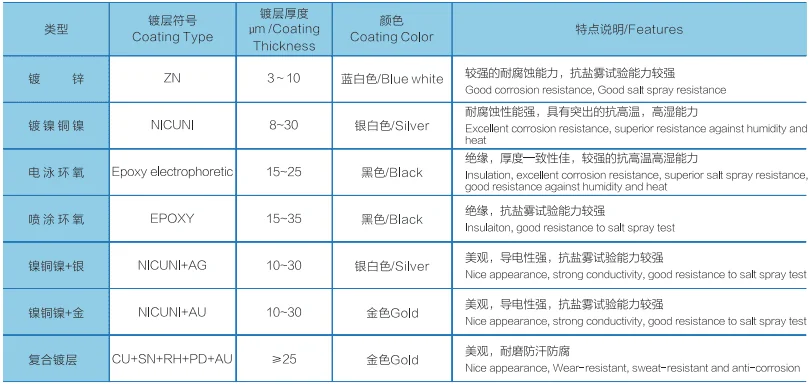
Common NdFeB coatings include zinc, nickel-copper-nickel, and nickel-copper-electroless nickel. Other options include gold, silver, tin, black nickel and black epoxy.
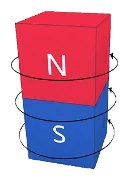
Magnetization
NdFeB magnets are not magnetic during most of production and become magnetic only after magnetization. The most common methods are DC magnetization and pulsed-current magnetization.
Custom Magnet Requirements
We generally do not stock standard items and focus primarily on custom magnet manufacturing. The most common customization questions concern shape, performance and coating.
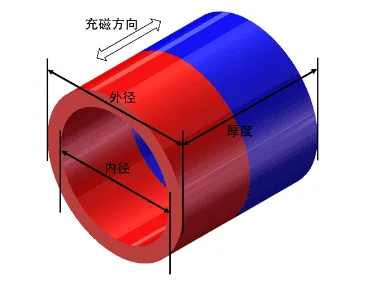
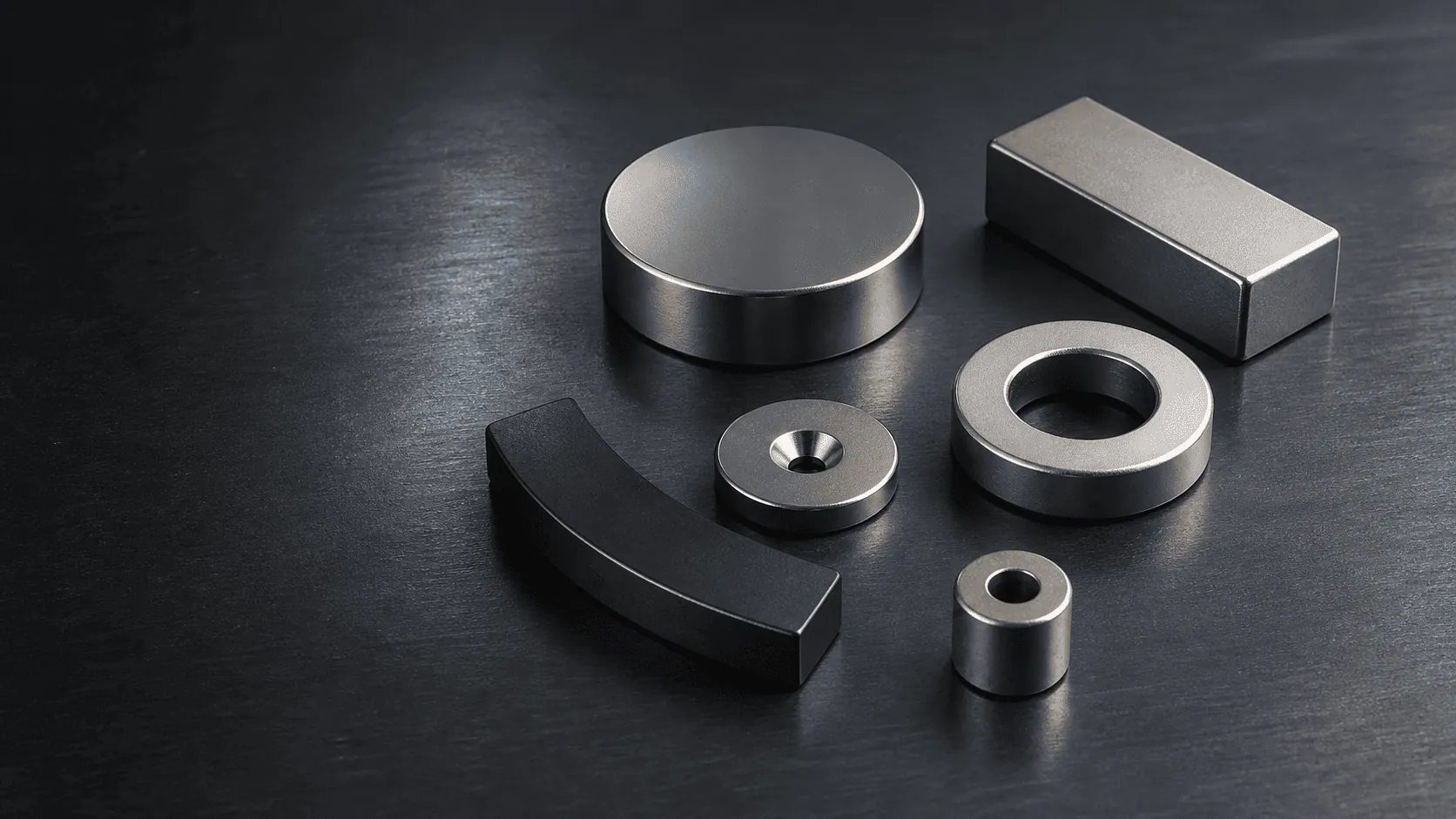
Custom NdFeB magnets are available in many forms, including round magnets, rectangular magnets, disc magnets, countersunk magnets, double-countersunk magnets, through-hole magnets, arc magnets, ring magnets, spherical magnets, sector magnets, trapezoidal magnets and irregular shapes.
For coatings, the main options are zinc, nickel and gold plating, as well as black epoxy.
Custom NdFeB magnets are available in grades from N35 to N56. The grade should be selected according to the actual application requirements.
You can submit a custom magnet requirements form through our Contact Us section.
Important Notes
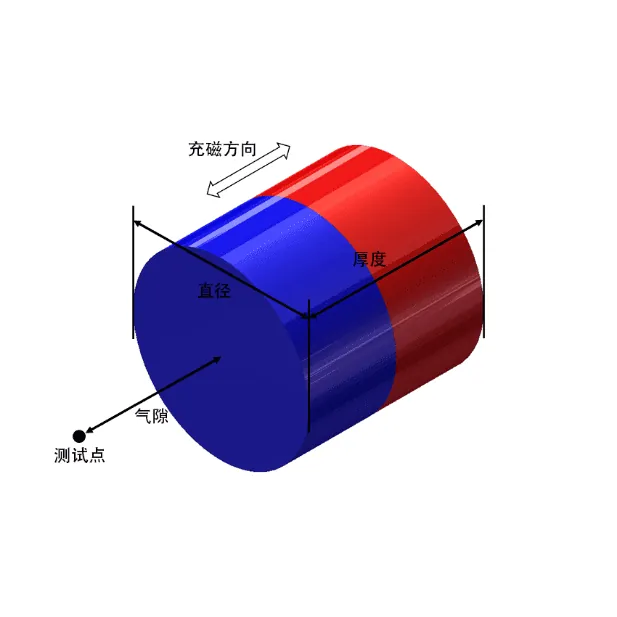
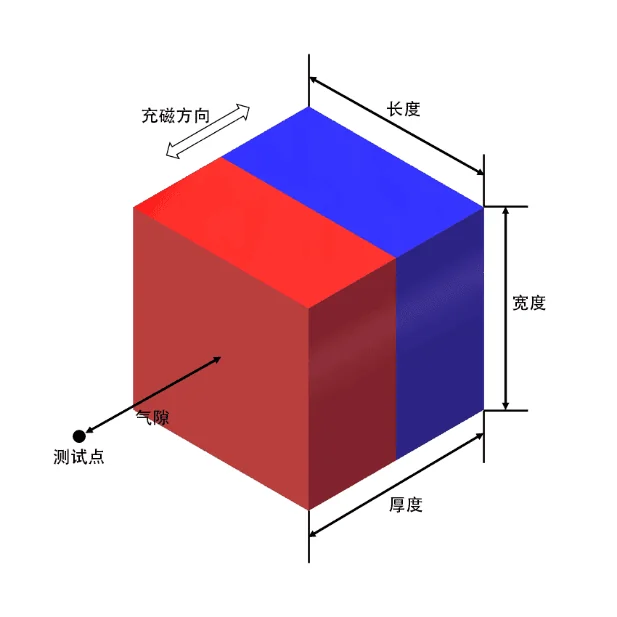
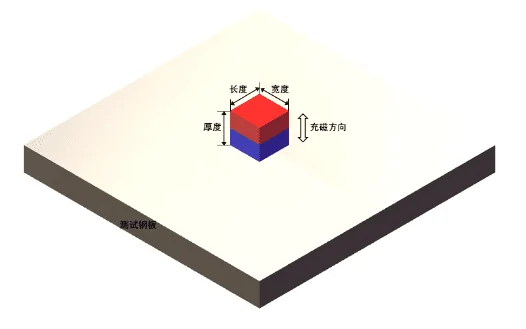
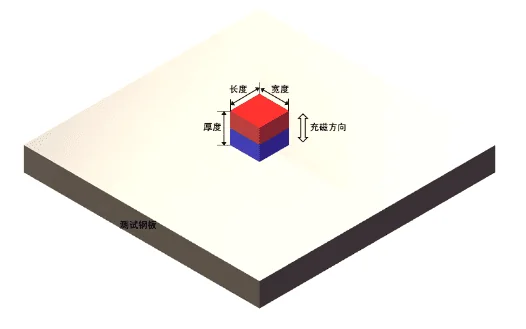
These calculators apply to uncoated, non-chamfered sintered NdFeB and sintered SmCo magnets.
Calculated results are for reference only.
Actual measurements are affected by factors such as air gap and Hall-sensor packaging. Please use measured results as the final reference.