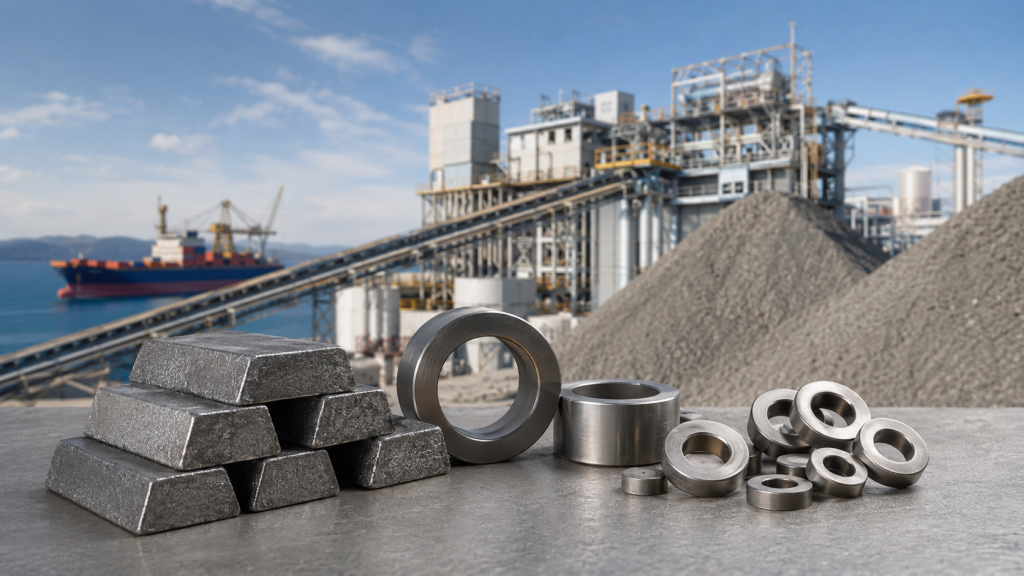
USA Rare Earth announced on September 4 that it had completed its combination with Serra Verde Group. The company says the combined organization brings together Serra Verde’s Brazilian rare-earth operation with USA Rare Earth’s processing, metallization, and magnet-manufacturing activities.
The announcement is relevant to permanent-magnet supply chains because rare-earth projects are often discussed in isolated stages: mining, separation, metal making, alloy production, and finished magnets. Linking more of those steps can improve coordination, but customer-ready supply still depends on execution, qualification, quality consistency, logistics, and commercial agreements.
USA Rare Earth stated that Serra Verde’s ramp-up and expansion targets are expected to advance over future periods. These are company expectations, not confirmed delivered capacity. OEMs and industrial buyers should therefore distinguish between announced plans and qualified production that can meet a defined magnet specification.
For B2B sourcing teams, the practical question is how a supplier protects continuity across the full chain: material origin, alloy availability, production controls, inspection reports, packaging, and delivery planning. Those checks remain useful whether a program uses standard NdFeB blocks or custom magnet assemblies.