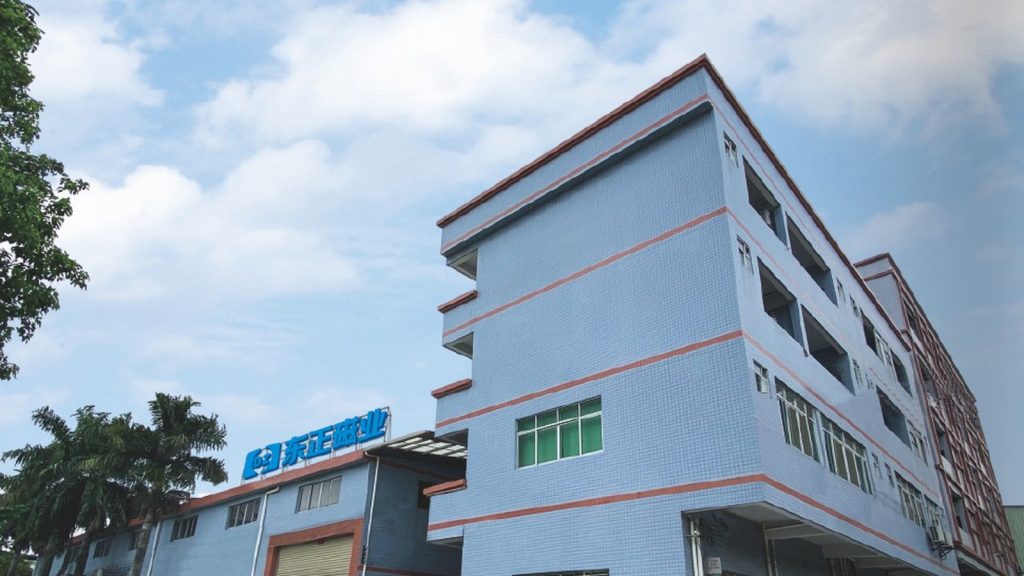
When B2B buyers evaluate a magnet supplier, a product photo or magnetic grade is only the beginning. The real questions are how the material is produced, how dimensions and coatings are controlled, how the part is magnetized and how each production lot is inspected before shipment.
This article takes you inside HK Magnet's manufacturing base in Dongguan, China, and explains how custom NdFeB magnets move from raw materials to finished components ready for customer validation and mass production.
About Our Dongguan Magnet Factory
Dongguan Dongzheng Magnetic Industry Co., Ltd. was established in 2012 in Zhongtang Town, Dongguan. The factory integrates the development, production and sales of permanent magnet products, with a focus on sintered NdFeB and sintered SmCo solutions for industrial customers.
Our manufacturing capabilities support discs, rings, blocks, arcs, countersunk parts, motor segments and irregular custom shapes. Different magnetic grades, temperature requirements, coatings and magnetization directions can be evaluated according to the customer's application.
The factory profile shows dedicated production and inspection areas, including cutting, electroplating, product inspection, packaging and magnetic testing. These capabilities help us support projects from drawing review and sample production to repeat-volume orders.
How a Custom NdFeB Magnet Is Made
Producing a reliable sintered NdFeB magnet involves much more than cutting a metal part and magnetizing it. Magnetic performance is created during the material-production stage, while dimensional accuracy, corrosion protection and final magnetic output are controlled during downstream processing.
1. Application Review and Material Selection
The process begins with the customer's application. Our team reviews the drawing, target magnetic performance, operating temperature, dimensions, tolerance, coating, magnetization direction, working environment and expected order volume.
This information is used to select a suitable material grade and production route. Choosing the highest magnetic grade is not always the best solution. A well-matched specification can provide the required performance while improving manufacturability, delivery stability and total project cost.
2. Raw Material Preparation and Melting
The required raw materials are weighed and prepared according to the selected magnetic composition. They are then melted to form an alloy with the chemical composition needed for the target NdFeB grade.
Material composition at this stage has a direct influence on remanence, coercivity, maximum energy product and temperature performance. For this reason, control begins before the magnet takes its final shape.
3. Hydrogen Treatment and Fine Milling
The alloy is processed through hydrogen treatment to make it easier to break into smaller particles. It is then milled into a fine magnetic powder.
Particle size and distribution must be controlled because they affect alignment, pressing, sintering and the final magnetic properties. The factory profile presents particle-size and material-analysis equipment used to support this part of quality control.
4. Magnetic-Field Pressing
The fine powder is pressed in a magnetic field. During this stage, the magnetic particles are aligned in a controlled direction before the compact is formed.
This alignment is essential because it establishes the preferred magnetic orientation of the finished magnet. The pressing method and field direction are selected according to the required part geometry and magnetization design.
5. Vacuum Sintering and Heat Treatment
The pressed compact is sintered under vacuum at a controlled temperature. Sintering bonds the particles together and creates a dense magnetic material.
Vacuum heat treatment is then used to adjust the material structure and help achieve the required magnetic performance and stability. After heat treatment, the material's magnetic properties are inspected before it moves to precision machining.
6. Precision Machining and Shape Processing
Sintered magnets are hard and brittle, so they require specialized machining methods. Depending on the drawing, production may include drilling, slicing, grinding, cutting and special-shape processing.
Our cutting workshop supports common and customized geometries, including discs, rings, blocks, arcs, motor segments, countersunk parts and irregular components. Dimensional inspection is carried out during and after machining to confirm the specified tolerances.
7. Surface Treatment and Electroplating
NdFeB magnets normally require surface protection because the material can corrode when exposed to unsuitable environments. The coating is selected according to the application's humidity, temperature, assembly method and expected service conditions.
The factory profile shows a dedicated electroplating workshop and coating-inspection equipment. Coating thickness, appearance and corrosion resistance can be evaluated according to the agreed specification. Available inspection methods include coating-thickness measurement and salt-spray testing.
8. Magnetization and Magnetic Inspection
After machining and surface treatment, the component is magnetized in the required direction. Options can include axial, diametrical, radial or multi-pole magnetization, depending on the magnet geometry and the customer's magnetic circuit.
The finished parts can then be checked with magnetic property measurement equipment, Gauss meters, flux meters and application-specific fixtures. The inspection method and acceptance range should be agreed during sample development so that both sides evaluate the product using the same criteria.
9. Final Inspection, Packaging and Shipment
Before shipment, the finished magnets go through final checks for dimensions, appearance, coating and magnetic performance. Packaging is selected according to the magnet's size, strength, surface protection and transportation requirements.
Strong magnets must be packed carefully to reduce movement, chipping, surface damage and unwanted magnetic interaction during handling. Approved products are then placed into storage and prepared for shipment according to the customer's delivery schedule.
Quality Control Throughout the Manufacturing Process
Quality inspection is not limited to the final product. Our factory profile presents equipment for material composition analysis, particle-size testing, dimensional measurement, magnetic performance testing, coating-thickness measurement, salt-spray testing, temperature and humidity testing, accelerated aging and XRF environmental screening.
This allows quality requirements to be connected to different production stages:
- Raw materials and powder: composition and particle-size control
- Sintered material: magnetic property verification
- Machined parts: dimensions and tolerances
- Coated parts: coating thickness, appearance and corrosion resistance
- Magnetized parts: surface field, magnetic flux or agreed magnetic criteria
- Finished orders: final appearance, quantity, packaging and shipment checks
The specific control plan depends on the customer's drawing, application risk and inspection requirements.
Supporting Custom Projects from Sampling to Mass Production
Our magnets are used in applications such as electric motors, servo motors, sensors, relays, consumer electronics, smart-home devices, household appliances, industrial automation, magnetic separation, automotive systems and precision equipment.
For each project, the goal is not simply to supply a magnet. It is to deliver a component that fits the customer's mechanical design, magnetic circuit, operating environment and production process.
To prepare an accurate quotation, customers are encouraged to provide:
- A 2D drawing or 3D model
- Material and magnetic grade, if already specified
- Dimensions and tolerances
- Magnetization direction and pole arrangement
- Coating or surface-treatment requirement
- Maximum operating temperature and working environment
- Pull force, surface field, flux or other test criteria
- Sample quantity, annual demand and delivery schedule
If the specification is still under development, our team can begin with the application conditions and help identify the technical information needed for sampling.
Visit HK Magnet or Start a Project
Whether you are developing a new product, improving an existing magnetic assembly or qualifying an additional manufacturing source, HK Magnet can support your project from technical review and sample validation to repeat production.
Send your drawing and application requirements to eric@hkmagnet.com, contact us on WhatsApp at +86 153 8731 8982, or submit an inquiry through hkmagnet.com. We will review the information and recommend the next practical step.
Product capabilities, inspection methods and technical specifications are subject to final engineering review and written confirmation.