Summary: A September 11 corporate update on Madagascar’s Ampasindava project highlighted progress on permitting, agreed mining terms, development funding and plans for an on-site pilot plant and laboratory. The update strengthens the project’s relevance to diversified NdFeB supply chains, but it does not yet represent commercial production or a guaranteed source of magnet-grade material.
A magnet-rare-earth project moves through development
Harena Rare Earths said its latest project presentation covered continued work on the Ampasindava ionic-clay rare earth project in Madagascar. The company reported progress through the permitting process and an agreement on mining terms with the Malagasy government. It also pointed to US$4.84 million of project-development funding made available under an agreement with the U.S. International Development Finance Corporation.
The project is reported to contain neodymium and praseodymium together with dysprosium and terbium. These elements are important inputs for NdFeB permanent magnets, particularly where high operating temperatures or demanding performance specifications require careful control of heavy rare-earth additions.
Pilot work is the next practical checkpoint
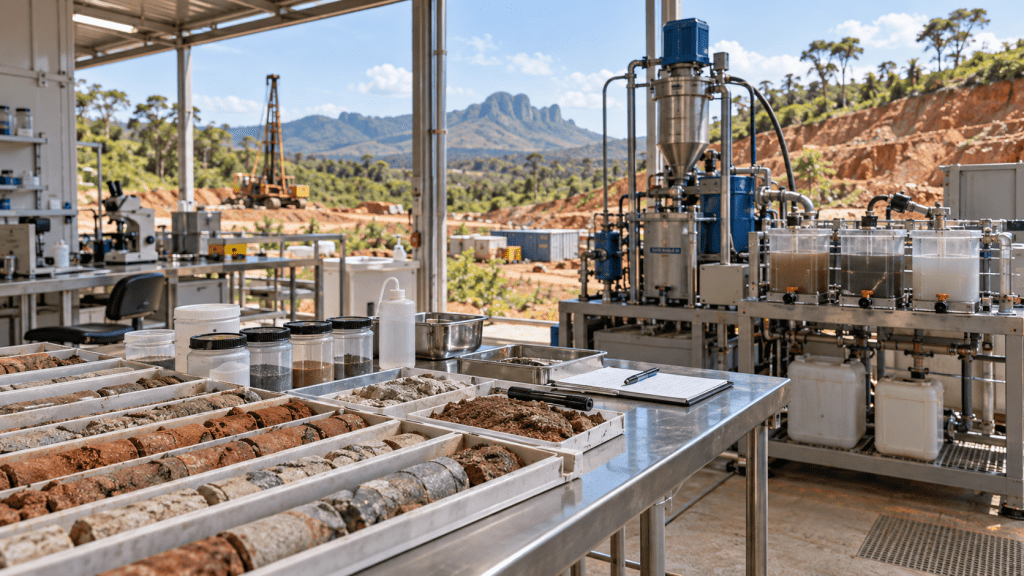
The update also described plans for an on-site pilot plant and laboratory as the project advances toward concentrate production. Pilot work can help test how consistently rare earths can be recovered from representative material and whether the proposed process can produce a stable intermediate product. It is an important bridge between laboratory results and a commercial flowsheet, but it is not the same as a commissioned mine or separation plant.
Infrastructure was another focus of the presentation, including access to processing inputs and proximity to port facilities. For a future magnet-material supply chain, those factors may influence operating cost, shipment reliability and the ability to move concentrate to downstream separation, metal and alloy facilities.
What magnet buyers should monitor
Procurement teams seeking non-concentrated sources of Nd, Pr, Dy and Tb should treat the announcement as a development milestone rather than an immediately available supply option. The most useful next indicators will be pilot-plant results, product specifications, recovery consistency, permitting completion, financing for commercial construction and a credible route from concentrate to separated oxides and magnet alloy.
For NdFeB buyers, upstream diversity can improve long-term supply resilience only when material can be qualified through the full chain. That means verifying chemistry, impurity limits, batch consistency, traceability and the conversion path into alloy and finished magnets. Until those steps are demonstrated, sourcing teams should keep current suppliers qualified while monitoring new projects as potential future options.
Source: Harena Rare Earths RNS-R update, September 11, 2026.