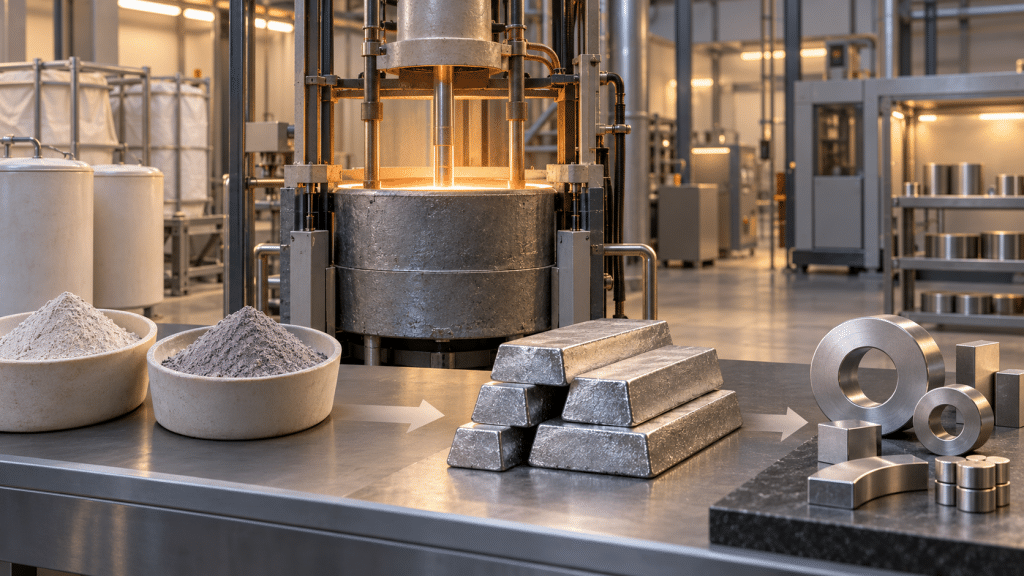
Summary: A newly inaugurated demonstration plant in Chile is designed to convert neodymium-praseodymium oxides into rare-earth metals and alloys, creating technical data for future permanent-magnet supply projects.
Aclara Resources and CAP have inaugurated a rare-earth metals and alloys demonstration plant at the Huachipato industrial site in Talcahuano, Chile. The facility uses molten-salt electrolysis to convert neodymium-praseodymium (NdPr) oxides into metals and alloys that can become inputs for permanent-magnet manufacturing.
The project is relevant to magnet buyers because separation into oxide is not the final step in the supply chain. Magnet producers also need qualified metal and alloy feedstock with repeatable chemistry. However, the new facility is a demonstration plant, not evidence that large commercial volumes are already available.
Designed to test metal and alloy production
According to the October 7 announcement, the plant has a nominal design capacity of up to 175 kilograms of rare-earth metal per day and a target purity of at least 99.5%. Production campaigns are intended to test stable, continuous operation and determine whether the material can meet potential customer specifications.
The first stage focuses on NdPr. A second demonstration stage is being evaluated and could introduce dysprosium oxide to produce an NdPrDy alloy. That second stage remains under consideration and should not be treated as an operating capability.
Why metallization matters to the magnet chain
Rare-earth oxide must be converted into metal and then alloyed before it can move into many sintered NdFeB magnet processes. This metallization step requires tight control of purity, oxygen exposure, composition and process stability. A project that can produce oxide but cannot deliver qualified metal or alloy still leaves a major gap between mining and finished magnets.
The partners said operating data from Chile will inform basic engineering for a future industrial project in Louisiana. The demonstration campaigns are also expected to support workforce training and digital process models. These are development milestones, not a guarantee of successful scale-up, financing, permitting or commercial production.
What magnet buyers should watch next
Procurement and engineering teams should look for repeatable campaign results, verified purity, alloy composition, impurity control and customer qualification data. They should also distinguish nominal daily design capacity from sustained output over a full production campaign.
If the facility validates its process under continuous conditions, it could help address a less visible bottleneck in Western rare-earth supply chains: turning separated oxides into magnet-ready metals and alloys. The practical evidence will come from qualified samples and reproducible operating data, not from the inauguration alone.
Source: Aclara Resources announcement via PR Newswire, October 7, 2026.