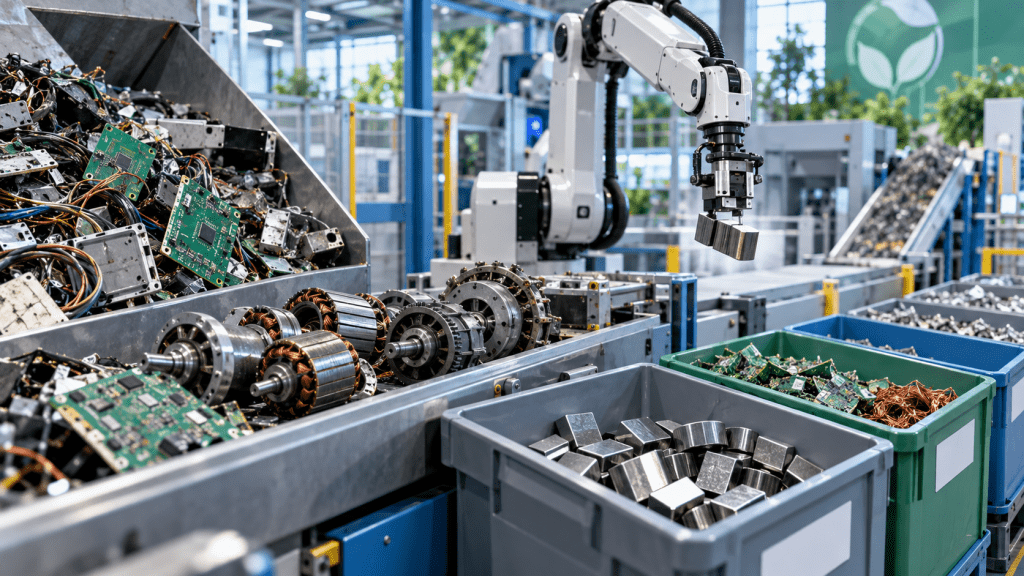
Summary: A new EU-backed recycling program will test technologies for recovering rare earths and other critical raw materials from permanent magnets, circuit boards, and electronic components. The project could improve secondary-material visibility, but industrial-scale recovery and qualification still need to be demonstrated.
CIRCUIT4EU targets critical materials locked inside e-waste
A September 8 industry report described the launch of CIRCUIT4EU, a Horizon Europe project focused on recovering critical raw materials from waste electrical and electronic equipment. The program has a reported budget of EUR 8.9 million and brings together 21 organizations from nine countries over three and a half years, with work scheduled through November 2029.
The project covers printed circuit boards, permanent magnets, and other electronic components. It targets nine materials on the European Union’s critical-raw-materials list, including boron and rare earth elements, alongside copper, cobalt, nickel, antimony, and tantalum.
Permanent magnets are part of the pilot pathway
Permanent magnets are valuable recycling targets because end-of-life motors and electronic products can contain concentrated rare-earth material. CIRCUIT4EU plans pilots across laptops, Wi-Fi equipment, e-scooters, and dishwashers, using technologies such as robotic disassembly, component separation, hydrometallurgical recovery, digital product information, and automated quality inspection.
The project is aligned with the EU objective of obtaining 25% of annual critical-raw-material consumption from recycling by 2030. That policy direction increases the importance of traceability, disassembly-friendly product design, and reliable data on recovered material.
What this means for magnet supply chains
For magnet manufacturers and users, the long-term opportunity is a more visible European stream of secondary rare-earth feedstock. Yet recovery alone does not guarantee material suitable for high-performance NdFeB or SmCo production. Chemical purity, alloy control, magnetic performance, contamination limits, and consistent volumes must all be verified.
Suppliers serving European customers should prepare for stronger questions about recycled content, chain of custody, and end-of-life handling. CIRCUIT4EU is still a development project, so its output should be treated as a technology and policy signal rather than evidence that large commercial volumes are already available.